Rubber Doesn't Clock Off: The Late-Autumn Tyre Audit That Tread Depth Can't Do Alone
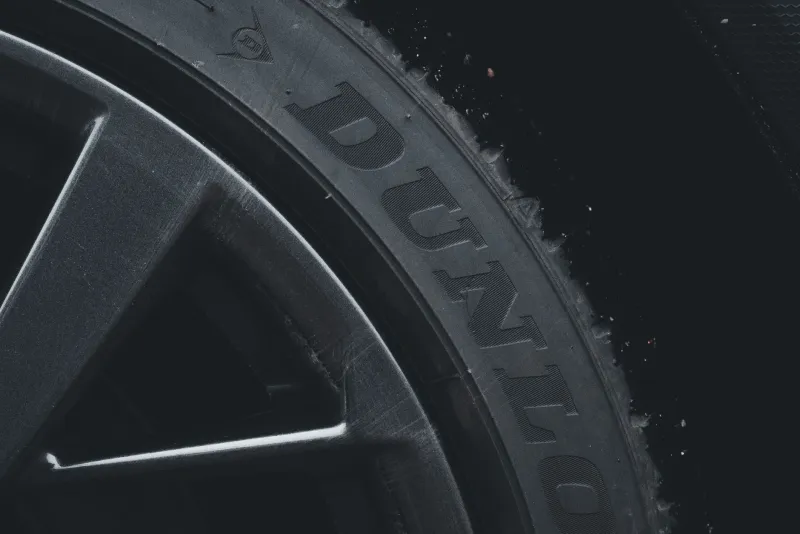
November is when a lot of tyres start telling the truth. The roads are colder, the leaves are slick, and the first proper rain after a dry spell lifts all the forecourt grime onto the tarmac. You check the tread, see 4mm, feel reasonably pleased with yourself, and carry on. That is exactly the moment to look at the sidewall instead.
At Donnelly VRS Ltd, the late-autumn tyre check is less about finding a legal failure and more about spotting the tyre that is quietly past its best. Tread depth is only one number. Rubber ages, cracks, hardens and sometimes carries a history you cannot see from the outside. None of that shows up neatly on a dashboard.
The legal floor is not a winter target
UK law is straightforward enough: the minimum tread depth is 1.6mm across the central three-quarters of the tyre, around the whole circumference. That is the line an MOT tester works to, along with condition checks for cuts, bulges, exposed cords and separation. It is not a recommendation for winter driving.
A tyre at 4mm is legal and, in many cases, perfectly usable. But wet braking performance falls away as tread wears, and cold rubber is less forgiving than warm rubber. Four millimetres is a sensible working floor for the colder months, not a target to celebrate. If you are down to 2mm or 3mm in November, you are asking a lot of the grooves that are meant to shift water.
So start with a tread gauge across several points on each tyre, not just the outer edge. Inner shoulders wear quietly, especially on cars with aggressive alignment settings. Check the spare too, if it has one. A space saver with 15-year-old rubber is a roadside surprise nobody needs.
Read the date code before you trust the tread
Every tyre carries a DOT code on the sidewall, usually on one side only. The last four digits are the week and year of manufacture. A code ending in 2319 means the 23rd week of 2019. That tyre is seven years old in 2026, even if it looks fresh and has barely turned a wheel.
There is no single legal expiry date for tyres in the UK, and an MOT tester cannot fail a tyre purely because it is old. But many vehicle and tyre manufacturers suggest annual inspection from around five years and replacement by seven, regardless of tread. Some put the outer limit closer to ten years for certain applications, but seven is a sensible cut-off for a car that sits outside through British winters.
The age issue bites hardest on low-mileage cars. A second car that does 3,000 miles a year can still be running original tyres at eight years old. The tread looks generous. The rubber has been baking, freezing and flexing for nearly a decade. That is not a bargain; it is a deferred bill.
Cracks, bulges and the part-worn question
Sidewall cracking is the visible sign of ageing. Fine surface crazing is common and not automatically a death sentence, but cracks deep enough to catch a fingernail, or any cracking near the shoulder, deserve a proper look. A bulge or lump is different altogether: stop driving and get it checked. That is structural damage, not cosmetic weathering.
Part-worn tyres can be legal, but they need care. A legitimate part-worn should be marked as such and meet the condition rules. The trouble is history. You do not know whether it has been run soft, repaired badly, kerbed hard or stored in the sun. A part-worn with a date code older than the car it is going on is not a clever saving. Nor is a mixed pair on the same axle with different ages and tread patterns.
If you are buying used rubber, read the date code first, inspect the inner and outer sidewalls, and ask about repairs. If the seller cannot tell you the age, assume the worst.
What the MOT can and cannot tell you
The MOT is a snapshot of minimum roadworthiness on the day. A tester can fail a tyre for insufficient tread, a cut over the legal limit, a bulge, exposed cords or clear separation. They can advise on cracking or ageing. What they cannot do is certify that a seven-year-old tyre with 4mm of tread is a good idea for a wet motorway run in December.
That is why an MOT pass is not a tyre service. It is a legal checkpoint. Treat advisories as a to-do list, not wallpaper.
Pricing the replacement against the alternative
A pair of decent mid-range tyres for a typical family hatch might cost £160 to £260 fitted, depending on size and brand. Premium rubber can run higher. Add wheel alignment if the old tyres wore unevenly, and budget for a TPMS valve if your car needs one. That is real money in November.
Now price the alternative. A blowout at speed is not just a recovery call. It can mean a wheel, suspension damage, a roadside repair and a lost day. If an insurer later finds a tyre that was clearly unroadworthy or badly aged, a claim can become a conversation nobody enjoys. Keep your receipts and note the date codes. It is dull paperwork, but it is useful paperwork.
The ten-minute forecourt audit
Check pressures when the tyres are cold, not after a motorway run. Look for cuts, bulges and kerb scuffs on both sidewalls. Read every date code. Run a tread gauge across the centre and both shoulders. Check the spare and the tools. Refit valve caps. Then stand back and look at the car square-on: if one corner sits oddly or the tyres look mismatched, ask why.
None of this makes an old tyre illegal by itself. It just tells you whether the rubber is still doing its job. In November 2026, with cold rain and early dusk, that is a better question than tread depth alone.