Brine, Brackets and the Bill That Blooms in April: A Winter Underbody Audit
Every UK winter leaves a mark under the car. It isn't always dramatic, and it rarely announces itself with a warning light. It turns up later as a brake pipe that looks furred rather than smooth, a subframe with a crusty edge, or an MOT tester's torch picking out something that was merely “a bit rusty” in November.
The salt goes on to keep the roads open. The brine goes down before the gritters even roll. And while the top half of the car gets washed at the weekend, the underside spends January to March sitting in a damp, salty film. That is the ledger. Nothing appears on it straight away. It gets settled in spring.
This isn't a scare story about every older car dissolving overnight. Plenty of vehicles come through winter perfectly well. But corrosion is one of those jobs where a cheap look now beats a painful estimate later — and most of the inspection can be done without ramps.
Where the salt actually sits
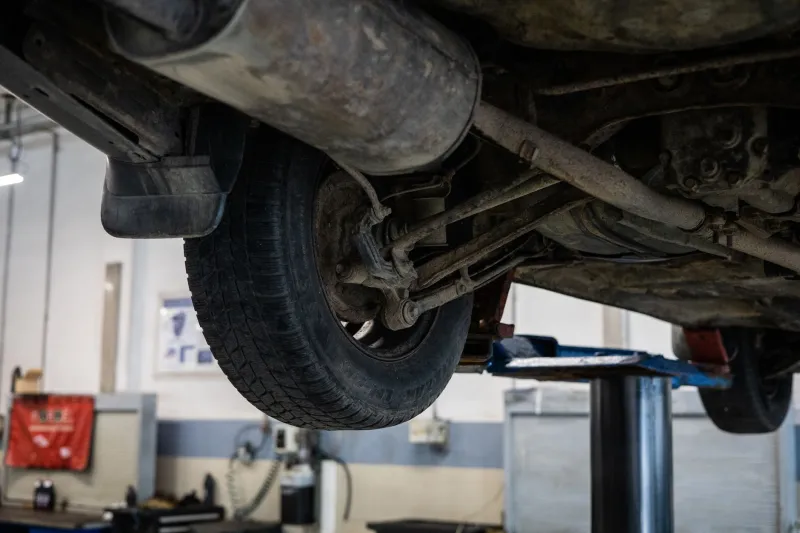
Salt doesn't need a hole to cause trouble. It clings to ledges, sits in seams and stays damp in the places that never get a decent airflow. On a typical UK car, the usual suspects are:
- Brake pipes and fuel lines running along the floor and over the rear axle. They collect spray and road film, and the pipe clips hold moisture against the metal.
- Subframes and suspension mounting points, especially the rear beam or subframe on older hatchbacks and estates. The corners and box sections trap grit.
- Sill seams and jacking points, where stone chips and failed underseal let salt start working on bare steel.
- Wheel arches and inner wings, particularly behind the plastic liners. That's where mud and salt mix into a paste and stay put.
- Boot floor edges, spare-wheel wells and rear valances, which catch spray thrown up by the rear wheels.
- Scuttle drains and bulkhead areas, where leaves and salt combine into a soggy mat that keeps the metal wet.
None of these are exotic. They're just out of sight. And out of sight is exactly where a spring MOT bill likes to start.
The half-hour audit: torch, kneel, look
You don't need a ramp to make a useful judgment. You need the car dry-ish, a decent torch, and a willingness to get your knees dirty. A piece of cardboard or an old mat helps.
Start at the front. Turn the wheels fully to one side and look into the wheel arch with the torch. You're not diagnosing a fault — you're looking for texture. Smooth underseal is fine. Flaking underseal, crusty edges and bubbling paint are the things to note. Repeat on the other side.
Then crouch alongside the car and look along the brake pipes where they run under the floor. You want to see clean metal or a factory coating. What you don't want is a pipe that looks like it's been rolled in salt and left to think about it. Surface dust is one thing; flaking, pitting or a pipe that feels rough through a glove is another. If a pipe is visibly crusty, don't wire-brush it “to check” and don't prod it hard. Note it and get it looked at properly. Brake pipes are not a wait-and-see item.
Have a look at the subframe and suspension arms, especially the rear. You're checking for holes, deep scaling and mounting areas that look swollen with rust. A light brown stain on a cast arm is normal on an older car. A flaky edge around a mounting bolt is worth a second opinion.
Finally, check the sill seams and jacking points. Run a finger along the seam — carefully, because a rusty edge can bite. If the seam feels crumbly or the underseal has lifted, that's a note for the garage, not a reason to panic.
Cleaning is part of the repair plan
A winter audit is only useful if you do something with the notes. The first job is usually a proper underside wash — not a quick blast at the supermarket jet wash, which can force water into places it shouldn't go.
Use a hose or a low-pressure setting and work along the floor, wheel arches and behind the bumpers. Pay attention to the areas where you found salt film. A garden sprinkler left running under the car for ten minutes can do a surprisingly good job of flushing the underside without blasting seals and electrical connectors. If you do use a pressure washer, keep it away from brake lines, wiring looms, fuel lines and any rubber boots.
Once it's dry, a light application of a proper wax-based cavity or underbody protector on clean metal is sensible. Avoid slathering old oil over everything — it traps grit, makes future inspections messy and doesn't solve the problem. If the car already has flaking underseal, the right move is to have the loose material removed and the area treated, not to cover it with a fresh black coat and hope.
The spring MOT will read the ledger
By April, the salt has done its work or it hasn't. An MOT tester with a torch and a pry bar will find the difference between “cosmetic” and “corroded to the point of weakness” quickly. Brake pipes, suspension mountings and structural sills are all fair game. So is anything that looks like it has been patched over without being properly repaired.
That's why the winter audit matters. It gives you time to plan. A slightly crusty rear subframe noted in January might be a clean-and-protect job. The same subframe found in March with a hole in it is a different conversation. A brake pipe that's starting to pit can be replaced on your schedule rather than after a failed test.
And if you're buying a used car at this time of year, the same rules apply. Look underneath before you fall for the shiny paint. A torch and a kneel are cheaper than a spring surprise.
The practical short version
Salt doesn't need to ruin a car, but it does need to be taken seriously. Wash the underside properly after the worst of the gritting, keep an eye on brake pipes and subframe edges, and write down anything that looks crusty rather than guessing. If you're not sure, get it on a ramp at a garage you trust — not because every speck of rust is a crisis, but because the underside is the one part of the car that never gets looked at until it's expensive.
Winter writes the ledger. Spring sends the invoice. A half-hour check in between is the cheapest line in the book.