After the Bang: A Forecourt Walk-Round for Pothole Damage
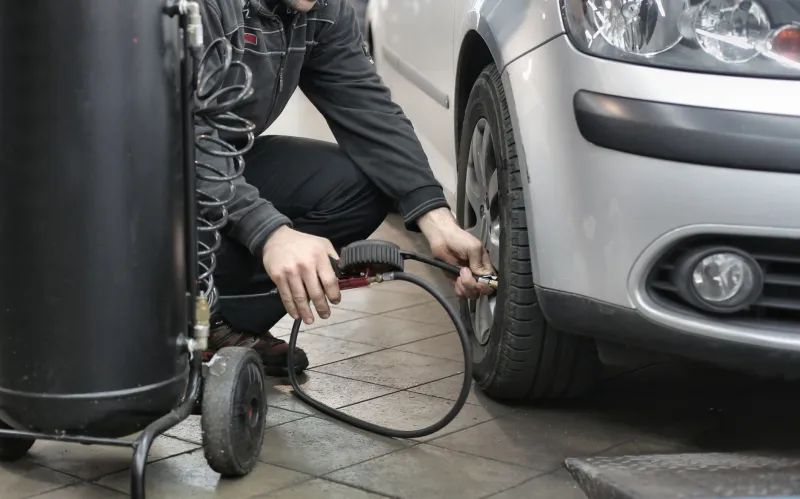
Potholes have a way of announcing themselves. You hear the bang, feel it through the seat, mutter something unrepeatable, and drive on. Most strikes are just noise. Some leave a receipt you don’t see for weeks — a tyre with a bulge, an alloy with a flat spot, a steering wheel that no longer sits straight. At Donnelly VRS we see the aftermath long after the pothole has been filled, so here’s the forecourt walk-round we’d do before the next motorway trip.
Park flat, switch off, and look before you touch
Find a level bit of ground, switch the engine off and let the car settle. You don’t need ramps for this. You do need to look at the bits you normally walk past.
Start at the tyre sidewalls. You’re looking for a bulge, a split, or a chunk of rubber missing. Check inner and outer sidewalls — the inner edge is the one that gets missed because it’s facing the exhaust and the brake disc, not the kerb. A bulge means the internal cords are damaged. That tyre is not a ‘keep an eye on it’ tyre. It’s a replace-before-driving tyre, or a spare-and-recovery job.
Then the wheels. Run your eye around the rim, especially the inner lip. A pothole can buckle an alloy without leaving a mark on the face. Look for cracks, fresh kerb rash, missing balance weights, and a tyre that looks bead-seated oddly.
Look behind each wheel. Fresh scuffs on the arch liner, a broken clip, or a shock absorber that’s misted with oil rather than just dusty. A light misting can be normal on older dampers; a drip is not.
Check the steering wheel. On a flat straight road at low speed, does it sit centred? If it’s suddenly off by 20 degrees, something moved. That could be tracking, or it could be a bent tie rod, control arm or strut. Don’t let a quick toe-and-go alignment hide a bent part.
Listen. Window down, low speed over a speed bump or rough patch. A clunk, a knock, a whine or a new vibration is information. So is a tyre pressure warning light that appears a day later.
The five-minute checklist
- Tyre sidewalls, inner and outer, all four corners. Bulge, split, tear, embedded object.
- Wheel rims, especially inner lips. Cracks, buckles, fresh marks.
- Arch liners and undertrays. Fresh scuffs, hanging trim.
- Shock absorbers and springs. Oil drips, broken spring coils.
- Steering wheel centred? Pulling? Vibration?
- Low-speed noise. Clunk, knock, hum.
- TPMS warnings and tyre pressures when cold.
If anything on that list is wrong, don’t book a ‘maybe next week’ slot. A sidewall bulge or a cracked alloy is a recovery job, not a motorway experiment.
When a cheap alignment check becomes an expensive repair
Alignment checks are cheap for a reason: they’re a measurement. The expensive bit is what the measurement finds. If the camber or caster is out, or the steering wheel is off after a strike, the garage needs to inspect the suspension before winding the track rods. A bent strut, a stretched tie rod or a shifted subframe won’t be fixed by a toe adjustment; it’ll just scrub a new tyre on the inside edge and feel vague at speed.
Ask for a printout before and after. Ask whether the technician checked for play in the ball joints, track rod ends, drop links and wheel bearings. If the answer is a shrug, go elsewhere. A £50 alignment check that masks a £300 suspension repair is not a bargain.
The suspension damage that waits
Potholes don’t just hit tyres. They send a shock through top mounts, bushes, bearings and springs. A wheel bearing damaged by an impact can take hundreds of miles to become a hum. A cracked spring can sit quietly until an MOT. A bent control arm can show up as uneven tyre wear long after the bang.
That’s why we suggest a second look a week or two after a heavy strike. Check tyre pressures cold, look at the tread wear pattern, and pay attention to any new noise over speed bumps. If the car feels loose or wanders, get it inspected.
Council claim or just get it fixed?
Straight answer: safety first, paperwork second. If a tyre is bulging or a wheel is cracked, fix or recover the car. Don’t drive on it while you argue about liability.
If you want to pursue the highway authority, gather evidence at the scene: date, time, location, photos of the pothole with something for scale, photos of the damage, dashcam footage, witness details and repair receipts. Report the pothole to the council. In England and Wales, highway authorities have a duty under Section 41 of the Highways Act 1980 to maintain highways, but they can defend claims by showing they had a reasonable inspection and repair system. That’s why paperwork matters.
A claim can take weeks or months. It may not cover your excess, hire car or time. For small repairs, it’s often less hassle to fix the car and move on. For a cracked alloy, a pair of tyres and a suspension arm, it’s worth a look. Either way, don’t exaggerate the damage and don’t skip the repair because a claim is in progress.
The receipt you don’t want
The real cost of a pothole isn’t always the first bang. It’s the tyre you replace early, the alignment you do twice, the bearing that starts humming on the commute. Five minutes on the forecourt won’t catch everything, but it catches the stuff that shouldn’t be driven on. That’s cheaper than finding out at 70 mph.