The Overnight Thief Under the Bonnet: Tracing a Battery Drain That Only Strikes at Dawn

Photo: car battery diagnostic clamp meter parasitic drain garage UK, via amazingcarsanddrives.com
There is a particular kind of November morning misery that goes like this: the car started perfectly yesterday, the battery is not old, the terminals look clean, and yet at 7am there is nothing but a click and a dashboard flicker. By the time the recovery driver arrives, the story has already been rewritten as a duff battery. Sometimes that is exactly what it is. Often, though, the battery is only the victim. Something in the car has been helping itself to charge overnight.
That is a parasitic drain, and it is one of the more frustrating faults to pin down because the car behaves perfectly once it has been jump-started or charged. The alternator tops the battery up, the drive home is normal, and the fault only shows its hand after several hours of silence. On a frosty morning, when the battery has less headroom and the engine takes more cranking, the margin disappears altogether.
First, prove the battery is not the problem
A battery can show a reasonable resting voltage and still be unable to deliver cold cranking current. Voltage alone is a poor referee. A garage conductance test, done with the battery at a sensible temperature and state of charge, will tell you whether the plates are past their best. Age matters too. A five- or six-year-old battery that has lived through short trips and winter cold may simply have reached the end of its useful life.
It is also worth checking that the correct battery type is fitted. Stop-start cars often need an AGM or EFB battery, and a standard flooded battery swapped in by mistake will not last. If a new battery is fitted, it may need coding or registering with the car so the charging system knows its capacity. Skip that step and you can create a fresh set of symptoms while trying to cure the old ones.
If the battery passes a proper test and is charged correctly, the question changes from 'is the battery tired?' to 'what is drinking its charge?'
Normal shutdown is not the same as silence
Modern cars do not switch off like a light bulb. After you lock up, control modules shut down in stages. Infotainment, body control, telematics and alarm systems may stay awake for a while, then drop into a low-current sleep. That can take 30 to 60 minutes on many cars, and some need longer. A quiescent current reading taken two minutes after locking is almost meaningless.
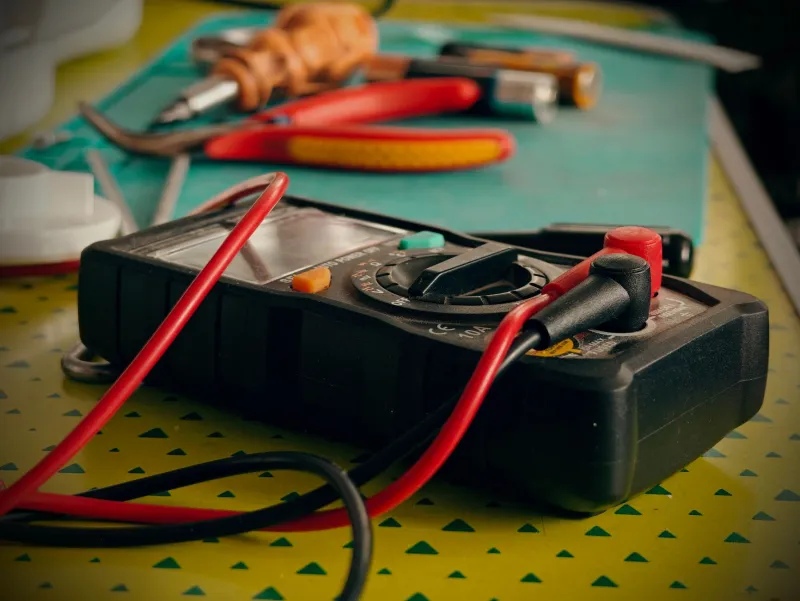
The practical test is to let the car go to sleep properly: doors closed, bonnet switch taped or bypassed if needed, key well away from the vehicle, no charger connected, and no one opening doors. Then measure the current draw with a clamp meter around the negative battery cable. A typical healthy car will settle at a low figure, often somewhere around 20 to 50 milliamps, though alarm and tracker-equipped vehicles can legitimately be higher. The exact figure should be checked against the manufacturer's specification rather than guessed from an internet forum.
If the reading stays high after the sleep period, you have a drain. If it is normal but the battery still goes flat, the fault may be intermittent, or the battery may not be getting enough charge on your usual journeys.
The usual suspects on a UK forecourt
A boot light that never goes out is a classic. The lamp is hidden, the boot closes, and the switch or latch tells the car the boot is still open. A glovebox lamp with a tired switch can do the same. These are small bulbs, but over ten hours they add up.
Dashcams are another common one. Parking mode is useful until it is not. A camera wired to a permanent live can flatten a battery over a weekend, especially if the voltage cut-off is set too low or the car is parked facing a busy road with motion detection triggering all night. Aftermarket alarms, trackers and insurance telematics boxes deserve a mention too. Some are fine; some are badly installed; some are both.
Then there are the modules that fail to sleep. A body control module that stays awake because of a faulty door latch, a water-damaged module in a footwell, or an infotainment unit that keeps trying to update can hold the whole network awake. A failing alternator diode can also drain a battery, though that is less common and usually shows up with other charging faults.
Small accessories matter less, but they are easy to rule out. A phone charger left in a live socket, a cheap USB adaptor, or a dashcam hard-wire kit with an unhealthy connection can all contribute. None of them excuses a battery that is genuinely worn out, but they can be the final straw on a cold night.
The test that separates habit from fault
The most useful diagnostic is not a single reading but a pattern. Charge the battery fully, leave the car locked and undisturbed overnight, and measure the voltage first thing in the morning before anything is opened. If it has dropped sharply, the drain is real. If it holds, look at your usage: repeated short trips, a stop-start system that never gets a chance to recharge, and winter loads such as heated screens and lights can leave a healthy battery undercharged.
For a stubborn drain, a garage may use a current clamp with a logging function, or measure voltage drop across fuses while the car is asleep. That second method needs care. Pulling fuses can wake modules, trigger alarms or lose radio codes, and on modern cars it is not a job for a screwdriver and impatience. A proper diagnosis follows the circuit, notes what was disturbed, and rechecks after each step.
Before the next cold snap
If your car has flattened more than once this month, do not simply fit a bigger battery and hope. A larger battery buys time, not a cure. Have the battery tested properly, have the quiescent current checked after a full sleep, and take note of anything you have added to the car in the last year. Dashcams, trackers and aftermarket alarms are frequent guests at this particular party.
A parasitic drain is rarely dramatic. It is a boot light, a module that will not settle, or a camera that keeps watching an empty street. But by dawn, it can leave you stranded at the worst possible moment. Find the thief before the frost does.