Steam on the Glass, Money up the Chimney: Rethinking the Cold-Morning Idle

Photo: frosty car windscreen being scraped on a cold UK driveway early morning, via m.media-amazon.com
There is a ritual that plays out on driveways across the UK every November morning. The kettle goes on, the scraper comes out, and the car is started and left to tick over while the windows slowly clear. It feels like mechanical kindness — giving the engine a gentle wake-up before asking it to work. On the forecourt, we see the other side of that habit: cars that spend their lives doing short, cold, idle-heavy runs, and the repair bills that follow.
A cold engine does not warm up efficiently by standing still. It warms up by doing light work. That is the short version. The longer version is worth understanding, because the old ritual is not just wasteful — it can be actively unkind to the parts you are trying to protect.
What the handbook actually says
Most modern owner's manuals are surprisingly direct: start the engine, wait a short moment for oil pressure, and drive off gently. They do not recommend long idle periods. That advice is not a cost-cutting trick by manufacturers; it comes from how engines, oils and emissions systems behave when they are cold.
An idling engine produces heat slowly because it is under almost no load. The coolant warms, eventually, but the gearbox oil, differential, wheel bearings and brakes stay cold until the car moves. You end up with a cabin that feels warm and a drivetrain that is still half asleep. The driver feels ready; the car is not.
Thick oil, slow flow and the wear window
Cold oil is thicker than hot oil. A 0W-20 or 5W-30 is designed to flow in low temperatures, but it still takes a few seconds to reach the top end and the turbocharger feed on a frosty morning. Those first seconds matter more than most drivers realise.
Idling extends the cold period. The engine sits at fast idle, oil temperature climbs slowly, and the combustion chambers stay cool. Gentle driving builds heat faster because the engine is doing moderate work, and the oil pump is spinning faster than it would at idle. The key word is gentle. Labouring a cold engine up a hill or joining a dual carriageway at full throttle is the opposite problem.
The condensation you are brewing
Petrol and diesel combustion produces water vapour. On a cold start, some of that vapour condenses on cold metal inside the engine and exhaust. A normal drive gets everything hot enough to evaporate it and send it out of the tailpipe. A long idle often does not.
That is how you get the pale mayonnaise under an oil filler cap, the sludgy crankcase breather, and the exhaust system that rusts from the inside out. Short trips and long idles are a poor combination. The engine never reaches proper temperature, the oil never boils off its moisture, and the corrosion has time to settle in. A car that does the school run and then idles for fifteen minutes is a car that lives in the worst part of its warm-up cycle.
Fuel, soot and expensive hardware
Idling uses fuel. A litre an hour is not unusual for a cold petrol engine, and a diesel can be similarly thirsty while it is trying to warm its catalyst and keep its idle steady. Over a winter, that is real money — and it is money spent going nowhere.
The emissions hardware suffers too. Catalytic converters and diesel particulate filters need heat to work. A cold idle produces plenty of soot and very little heat, which is a bad deal for the DPF, the EGR valve and the intake system. Direct-injection petrol engines can also accumulate deposits on the back of the intake valves, and prolonged cold running does them no favours.
Stop-start systems often sit disabled on a cold morning anyway, so the car is already telling you something. It wants load, not a long wait.
The parts that never warm up on the spot
An idling car warms its coolant and, eventually, its oil. It does not warm its gearbox oil, its differential, its wheel bearings or its tyres. It does not dry the brakes or shake the flat spots off a car that has been parked for a week.
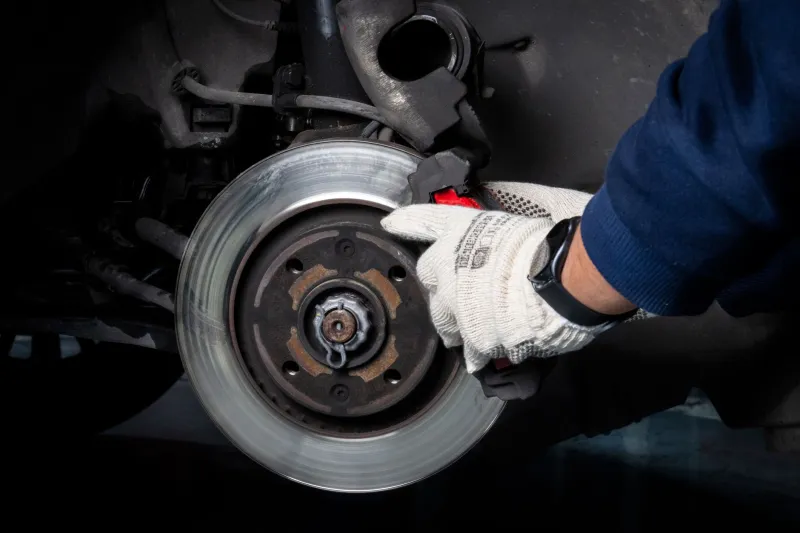
Tyres are a good example. Cold rubber has less grip, and cold pressures read lower than they will once you are moving. A few minutes of idle does nothing for either. Gentle driving does both. The same applies to the brakes: a light application or two on the move clears surface rust and gets the discs and pads up to temperature far better than standing still with the handbrake on.
Anti-idling rules, theft and the school-run queue
UK local authorities have had anti-idling powers for years, and enforcement has become more visible in some towns and cities. Fines are not universal, but the direction of travel is clear. More practically, an unattended car with the engine running and the keys inside is an easy target. Frosty mornings are peak season for theft from driveways and outside shops.
Insurers look closely at whether a car was left insecure or unattended with the keys in it. A stolen car that was defrosting on the drive may not be treated as sympathetically as the owner expects. The old ritual is not just inefficient; it is a security risk with a financial tail.
A cold-morning routine that actually works
Start the engine, give it twenty or thirty seconds for oil pressure, and then drive gently. Keep the revs moderate, avoid heavy throttle and let the temperature gauge climb as you go. Use the scraper and de-icer properly — do not rely on the heater to clear a windscreen you cannot see through. Switch on the air-conditioning for demisting; it dries the air and clears the glass faster than warm air alone.
Once you are moving, the cabin heater will actually work better because the engine is under load. That is the irony of the driveway idle: the thing you are waiting for arrives sooner once you drive.
If you run an electric car, pre-conditioning while plugged in is the equivalent good habit. You get a warm cabin and a defrosted screen without burning fuel or sitting on the driveway.
When idling is the lesser evil
There are moments when standing still is the right call. If you cannot see safely, do not drive. If you are stuck in traffic, you are stuck. If the car is iced up and you need the demister while you scrape, a few minutes may be unavoidable. The problem is the habit, not the exception.
The old ritual is not a maintenance routine. It is a waiting routine. Ten minutes of idle feels like care, but the car does not need the wait. It needs the drive — gentle, sensible and with a clear windscreen.