The DPF Light That Won’t Go Out: Regeneration Truths for Short-Trip Diesel Drivers
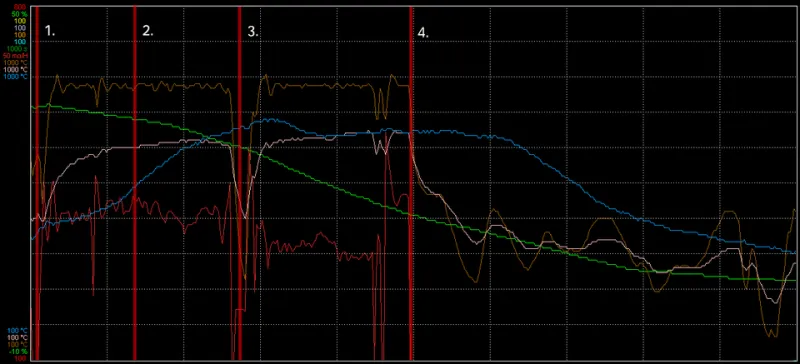
Photo: DooMMeeR, CC BY-SA 3.0, via Wikimedia Commons
At Donnelly VRS Ltd, the diesel particulate filter warning light is one of the most misunderstood lamps on the dashboard. It appears, the driver remembers a mate saying to take it for a blast down the motorway, and suddenly every short trip becomes a test of nerve. Sometimes that advice works. Sometimes it simply delays the inevitable and turns a manageable regeneration job into a limp-mode recovery and a much bigger bill.
What the light is actually telling you
The DPF catches soot from the exhaust. It has to burn that soot off periodically, otherwise the filter clogs. Normal passive regeneration happens when the exhaust gets hot enough on a longer, faster run. Active regeneration is the engine management system deliberately raising exhaust temperature to burn off soot when passive conditions are not being met.
For a diesel doing school runs, short commutes and stop-start town work, passive regeneration rarely gets a proper chance. The filter fills, the ECU tries an active regeneration, the driver switches off before it finishes, and the cycle repeats. The amber light is usually a warning that soot loading is high. A flashing light, a red warning, an engine management light alongside it, or a message about engine fault should be treated differently: stop treating it as a DIY challenge and get it diagnosed.
Passive versus active regeneration in plain English
Passive regeneration is the easy version. A steady run at motorway or fast A-road speed gets the exhaust hot, and the soot burns away without the driver doing anything special. Active regeneration is the ECU taking charge. You may notice a hotter smell, a cooling fan running after switch-off, a slightly different idle, or a brief increase in fuel use. It is normal, but it needs time and the right conditions to complete.
Repeatedly interrupting active regeneration is where trouble starts. Unburnt diesel can end up in the engine oil, which is bad news for lubrication and can affect the turbo and bearings. That is one reason a garage should check oil condition and level when a DPF fault is investigated. Simply clearing the code and carrying on is not a repair.
When a motorway run genuinely helps
A longer run can help when the light is amber, the car is driving normally, there are no other warnings, and the filter is loaded with soot rather than ash. Use a route where you can keep a steady 50–70mph for 20 to 30 minutes, with the engine around 2,000–2,500rpm where possible. Do not sit at 30mph in a low gear and call it a regeneration. Do not break speed limits. Do not switch off the moment you leave the dual carriageway.
If the light does not clear after one or two sensible attempts, stop repeating the same journey. A second or third motorway blast is not a diagnosis. It may be a sensor fault, a blocked EGR system, a boost leak, a failing thermostat, or simply a filter that is beyond soot-burning territory.
When the motorway blast will not fix it
A forced regeneration is not the answer to every DPF light. If the warning is flashing, the car is in limp mode, there is excessive smoke, a strong fuel smell, or an engine fault message, a fast run could make matters worse. A garage needs to look at live data: soot mass, differential pressure, exhaust temperature, sensor readings and fault codes. They also need to check the oil, because a forced regeneration on degraded oil can cause damage.
Ash is another limit. Soot can be burned off; ash cannot. A high-mileage filter may be physically full of ash, in which case regeneration only buys time. DPF removal is not a legal route in the UK and will fail an MOT. Anyone offering to cut one out is selling you a future problem, not a fix.
What a garage-led forced regeneration involves
A proper forced regeneration starts with diagnostics, not a button press. The technician checks why the filter loaded up in the first place, confirms the sensors are reading sensibly, and makes sure the oil is fit for the heat involved. The regeneration itself can take 30 to 60 minutes or more, sometimes static in the workshop and sometimes on a controlled road test. It raises exhaust temperatures significantly, so it is not something to attempt on a driveway with a laptop and hope.
If the filter is cracked, contaminated or ash-loaded beyond recovery, replacement may be the honest answer. That is not the cheap option, but it is cheaper than repeated failed regenerations, a turbo issue, or a breakdown on the school run.
Why ignoring the light gets expensive
Ignoring a DPF warning can lead to limp mode, reduced power, poor fuel economy and a car that refuses to rev properly. Continued backpressure puts strain on the engine and turbo. Repeated interrupted regenerations dilute the oil. Eventually you are paying for recovery, diagnostics, a forced regeneration, an oil change and possibly a replacement filter. The earlier you deal with the amber light, the more likely you are to stay in the sensible end of that price list.
A short-trip routine that keeps you ahead
If your diesel mainly does short journeys, give it a proper longer run every week or two, use the correct low-SAPS oil, keep to the service schedule, and do not ignore a rising oil level or a diesel smell in the oil. Avoid long idling. If the DPF light returns soon after a successful regeneration, book it in rather than planning another motorway lap. At Donnelly VRS Ltd, we would rather see a DPF warning early, while it is still a regeneration job, than after it has become a limp-mode recovery.