What Your Nose Knows: Six Car Smells a Garage Reads Like a Fault Code
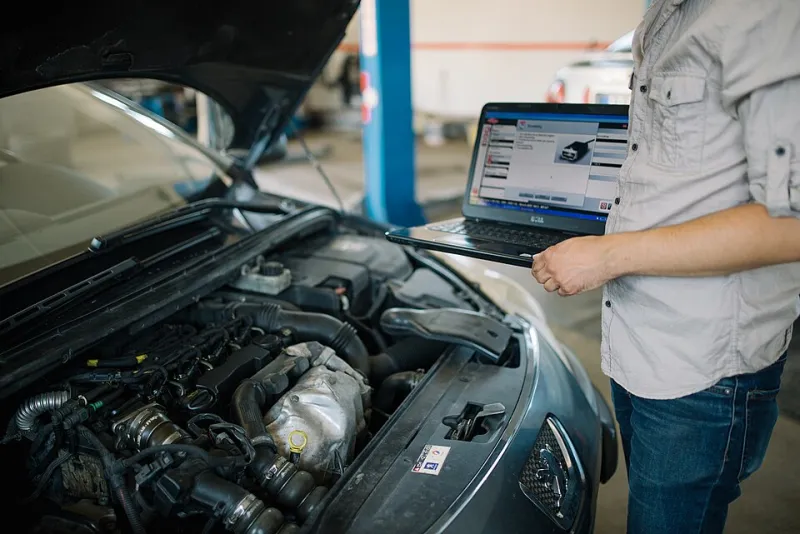
Photo: Shixart1985, CC BY 2.0, via Wikimedia Commons
At Donnelly VRS Ltd, we sometimes diagnose a car before it reaches the ramp. Not with a scanner — with a nose. Smells are crude, but they are honest. They tell you something is hot, leaking, burning or about to let go. The trick is knowing which whiff means “keep an eye on it” and which means “pull over now”.
This is not a substitute for a proper inspection. It is a way to ask better questions when you ring the garage. Here are six smells worth learning.
1. Hot Coolant — The Sweet Steam That Says Stop
What it smells like: a sweet, syrupy steam, often with a hot metal edge. It can catch in your throat.
What it usually means: coolant is escaping and hitting something hot — a hose, the radiator, the engine block. A weak pressure cap, a split hose or a failing water pump can all do it. If steam is coming from under the bonnet, the engine is already telling you it is unhappy.
Roadside check: only when the engine is cold. Never open a hot coolant cap. Look for dried pink or blue staining around hoses and the radiator. Check the expansion tank level when safe.
Verdict: stop safely and do not drive it hot. A coolant leak can turn into a warped head very quickly. If the temperature gauge is climbing, switch off and call for recovery.
2. Burning Oil — The Blue Haze Behind You
What it smells like: acrid, oily, slightly bitter. It lingers and can make your eyes water.
What it usually means: oil is dripping onto a hot exhaust or being burned in the engine. A rocker cover gasket, a turbo seal or worn piston rings are common suspects. If you can see blue smoke from the exhaust, the engine is burning oil, not just leaking it.
Roadside check: with the engine off and cool, check the oil level. Look for fresh wet patches under the car. Do not crawl under a car on a busy road — safety first.
Verdict: book it in soon. A small leak is a nuisance; a big one can starve the engine. If the oil light comes on, stop immediately.
3. Raw Fuel — The Petrol Station Smell That Follows You
What it smells like: neat petrol, sharp and unmistakable. It may be stronger after refuelling or at idle.
What it usually means: a fuel leak, a stuck injector, a faulty evap system or a poorly sealed fuel cap. On a diesel, a strong fuel smell can also point to a leak from the high-pressure system.
Roadside check: do not smoke, and do not start the engine if you can smell fresh fuel strongly. Look around the filler cap and under the car for drips. If the smell is inside the cabin, get out and ventilate it.
Verdict: stop and get it checked. Fuel leaks are a fire risk. This is not a “wait until payday” smell.
4. Hot Brakes — The Metallic Burn After a Long Hill
What it smells like: hot metal, burning friction material, sometimes a bitter chemical edge. It often arrives after hard braking or a steep descent.
What it usually means: the brakes are working hard, or a caliper is sticking and dragging. A seized caliper can overheat a disc and ruin pads quickly.
Roadside check: after stopping safely, look at the wheels. If one wheel is much hotter than the others, or you can smell burning near it, do not touch the disc. Let it cool. Check for smoke.
Verdict: if it happened once on a steep hill and fades, keep an eye on it. If it happens on a normal drive, or one wheel is hot, book it in. If the pedal feels long or the car pulls, stop.
5. Sweet Syrup Inside the Cabin — The Heater Matrix Whiff
What it smells like: syrup or sweets, often strongest through the vents or after switching on the heater. You may also notice a greasy film on the windscreen.
What it usually means: coolant is leaking inside the cabin, often from the heater matrix or a pipe joint. It is the same coolant smell as number one, but the location changes the diagnosis.
Roadside check: look for damp carpets, especially in the footwells. A sweet smell with misting windows is a classic sign. Do not taste anything.
Verdict: book it in. A heater matrix leak can fog the windscreen and slowly drain the cooling system. If the windows will not clear, do not drive.
6. The Clutch Whiff — The Sharp Burn That Means Slipping
What it smells like: a sharp, hot, friction-material smell, similar to burning brakes but usually stronger and more localised. It often appears after a hill start or a lot of low-speed manoeuvring.
What it usually means: the clutch is slipping or being ridden. It could be driver technique, a contaminated clutch, or a clutch that is simply worn out. A slipping clutch will often show up as rising revs without matching road speed.
Roadside check: find a safe place to stop. See whether the smell fades. On a quiet road, try a gentle pull away in a higher gear — if the revs climb and the car does not, the clutch is suspect. Do not keep testing it.
Verdict: book it in. A clutch that smells hot once after a hard hill start may be fine; one that smells hot on a normal drive is on borrowed time. If it will not engage smoothly, stop.
The Forecourt Rule
Smells are clues, not verdicts. A sweet steam smell is urgent; a faint oily whiff after a long drive may just be a small leak that needs watching. The important thing is not to normalise a new smell. Cars do not usually develop a burning, sweet or fuel-like aroma because they are happy.
If you are unsure, ring the garage and describe the smell, when it happens and whether it comes through the vents or from under the bonnet. At Donnelly VRS Ltd, that description often narrows the job down before the car is even on the ramp. Your nose is cheaper than a recovery truck — use it.